
Common HVAC Problems During Monsoon in India: Causes, Prevention & Solutions
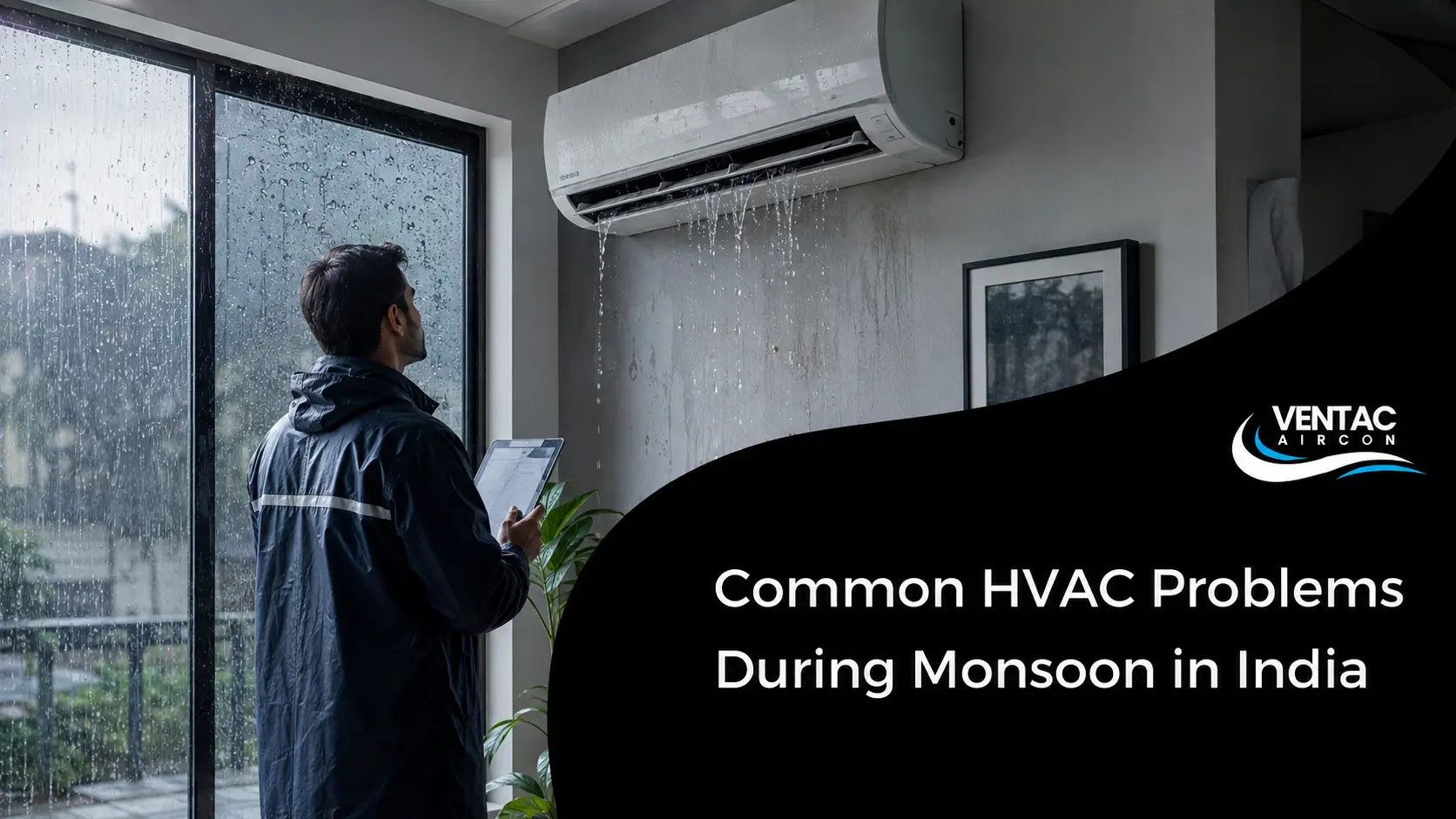
Indian monsoon provides some relief to the people from the harsh hot weather, but it makes life difficult for the functioning of the HVAC system due to the high humidity, rainwater, moisture, blocked drainage lines, and fluctuating electricity supply that may influence its performance and may cause malfunctions.
For commercial buildings, office premises, hospitals, hotels, retail places, and industries, HVAC maintenance during the monsoon in India becomes necessary to ensure smooth operation. Knowing about the problems of the HVAC system in Indian monsoon would be of great help to the business.
Why Does Monsoon Affect HVAC Systems?
1. Water Leakage from Indoor AC Units
Water leakage in AC is another frequent problem that takes place during monsoon season. The reasons behind such leaks could be anything from clogged drain pipes to the wrong installation process, which causes condensation of water and leakage inside the house.
This is especially important for people who need split air conditioner installation or ductless AC installation.
Prevention: Check the drainage pipe, clean filters regularly, and ensure proper installation of the AC.
2. Reduced Cooling Efficiency
Higher humidity makes indoors hotter even when there is no fault with the AC unit. Inadequate filtration, clogged coils, lack of enough refrigerant, and poor airflow may also lower the efficiency of the cooling process.
A well-installed central air conditioning system can ensure constant cooling of more than one room if the right size and capacity is selected.
3. Corrosion of Outdoor AC Components
Continuous exposure to rainfall and moisture may result in corrosion of the outdoor unit, wiring, coils, and other equipment.
Regular inspections and proper maintenance can help in detecting any sign of corrosion due to moisture at an early stage.
4. Clogged Filters and Poor Airflow
Humid monsoons can cause dust, moisture, and the breeding of microbes in HVAC components. The dirt clogging filters reduces the flow of air and causes the system to work more to provide the required ventilation, thus using more energy.
HVAC maintenance needs:
- Air filter cleaning/replacement
- Coil examination
- Drain line cleaning
- Condenser examination
- Checking electrical connections
In case of complex ductwork, HVAC duct installation is very necessary.
5. Electrical Problems and Voltage Fluctuations
During the monsoon season, the unstable electricity supply due to thunderstorms may lead to increased possibilities of electrical problems. The voltage surges may cause difficulties to the compressor, control board, motor, and lots more HVAC systems.
Inspections of the HVAC systems by professional experts may be useful in detecting any electrical or other hazards.
6. Mold, Odour & Indoor Air Quality Issues
Humidity causes an increased potential for development of molds and microorganisms, particularly in dirty filters, drain pans, coils, and ducts.
An unpleasant odor and poor quality of indoor air are inevitable results of such a problem.
Proper HVAC duct installation and cleaning can contribute to better indoor air quality in commercial buildings.
7. Compressor Stress and Higher Energy Consumption
If an AC is unable to keep up with the desired temperature in a humid environment, the compressor could be working for longer than required, thereby increasing electricity usage and putting added pressure on the machine.
Modern-day inverter AC installation would provide greater energy efficiency in suitable scenarios since inverter systems can vary the performance of the compressor based on cooling requirements.
How Proper HVAC Installation Helps During Monsoon
Many issues associated with the monsoon can be solved by the right design and installation of systems.
According to the needs of the structure and cooling system, one of the following might apply:
- Central air conditioning system installation for large commercial spaces
- Split air conditioner installation for individual rooms or smaller areas
- Ductless mini split air conditioner installation where ductwork is impractical
- HVAC system installation for complete commercial cooling requirements
- HVAC duct installation for efficient air distribution
Selection of experienced HVAC installation companies is important since wrong sizing, drainage issues, lack of insulation, and ducting might become a problem even before the monsoon season.
When Should You Consider a New HVAC Installation?
In the event that an HVAC system is having many breakdowns, poor cooling, high energy usage, and water leakage issues, fixing the problem may not always be the most economical way out.
Prior to replacing a system, there are several factors that companies need to consider, including:
- Size of the building
- Need for cooling
- Energy efficiency
- Current ducting
- Capacity of the equipment
- History of maintenance
- Installation needs
The overall HVAC system installation cost will depend on the equipment being used, the cooling capacity, building design, ducting, electrical needs, and installation process.
Likewise, the cost of installing central AC, split AC, or ductless AC installation will depend on the project being considered.
For this reason, businesses need to get an assessment of the site, and not just the installation cost.
Monsoon HVAC Maintenance Checklist
During the rainy season:
- The filters must be cleaned/replaced.
- The indoor/outdoor units should be checked.
- The condenser and evaporator coils need to be cleaned.
- The drain pipes must be checked for any blockages.
- The refrigerants should be inspected.
- The electrical connections should be inspected.
- The ducts need to be checked for leakage/moisture.
- Corrosion of the outdoor units should be checked.
- Any unusual noises/smells/vibrations need to be checked.
Why Choose Ventac Aircon?
Monsoon HVAC service is not merely fixing the air conditioning that has stopped functioning. It involves preventive HVAC maintenance to keep commercial facilities operating reliably and efficiently and avoid any sudden problems and downtime.
Ventac Aircon is known for providing HVAC services which emphasize proper installation, maintenance, and cooling performance. If you need HVAC system installation, preventive maintenance, ductwork, or an entire air conditioning system, choosing the appropriate HVAC equipment and its maintenance can make a lot of difference during the monsoon season in India.
Prevent an HVAC problem by scheduling a check before monsoon troubles arise.